Introduction
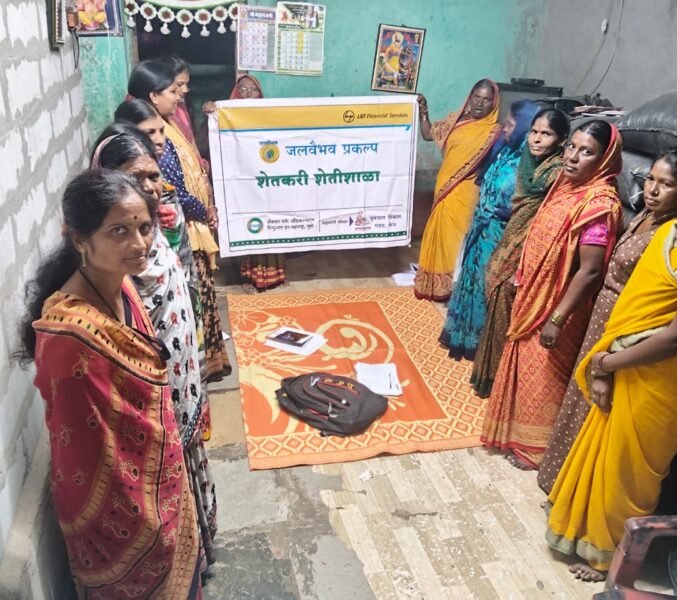
Under Yuva Gram Vikas Mandal, Kej, the Jalvaibhav Project has been implemented for the past five years in 11 villages of Dharashiv district. The project is supported by L&T Finance and implemented under the technical guidance of AFARM, Pune.
A key component of this initiative is the Farmer Field School (FFS), aimed at educating farmers on modern and sustainable agricultural practices, increasing crop productivity, and enhancing farm incomes.
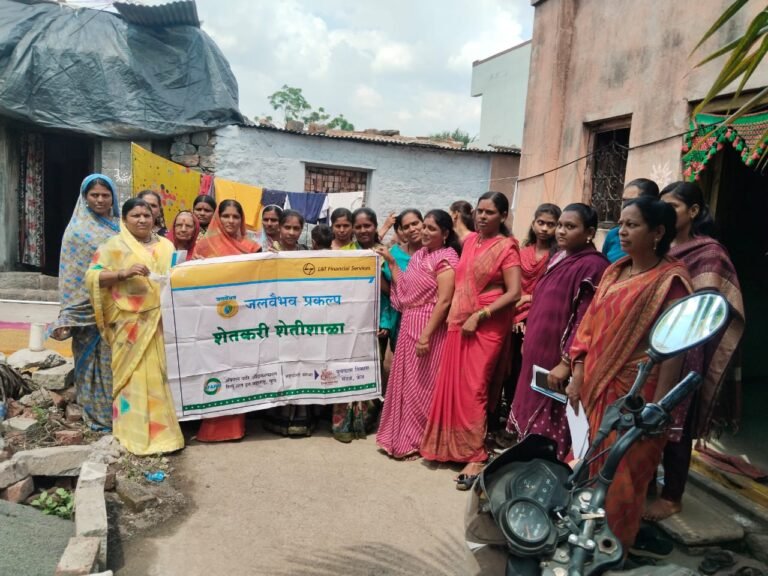
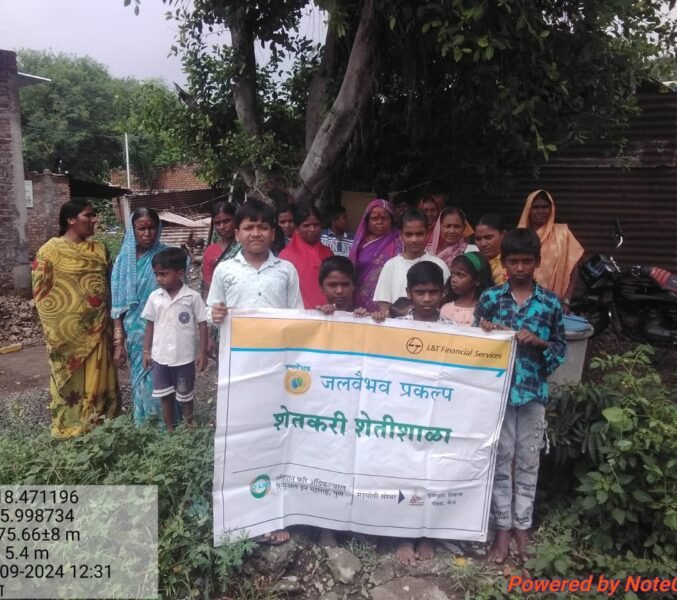
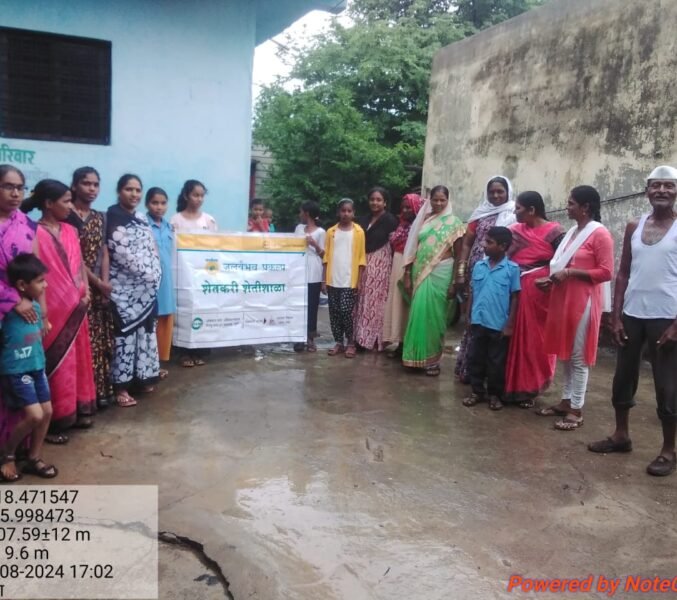
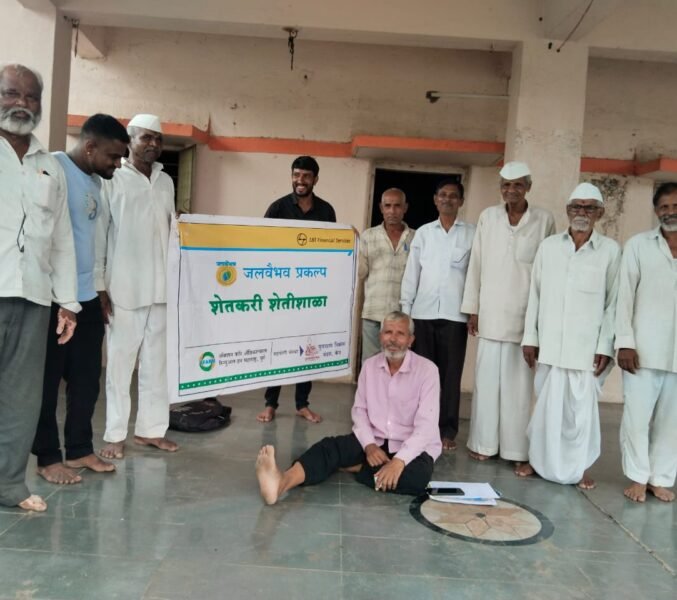
Between July and December, a total of 66 Farmer Field Schools were conducted across 11 villages, with participation from 603 farmers.
Objectives of the Farmer Field Schools
The Farmer Field Schools are implemented in 5 villages of Kalamb taluka and 6 villages of Dharashiv taluka with the following objectives:
• To promote low-cost, sustainable farming practices
• To guide farmers on crop management and farm planning
• To improve crop productivity and farm income
• To encourage adoption of climate-resilient and water-efficient agriculture
• To provide technical knowledge that enables farmers to achieve long-term sustainable livelihoods
Through these schools, farmers are trained to maximize production with minimum input costs.
Training Methods and Tools Used
The Farmer Field Schools used participatory and interactive methods, including:
• PDF sharing and WhatsApp groups
• Expert lectures and demonstrations
• Experience sharing and group discussions
• Information booklets and posters
• Knowledge dissemination through success stories
Key Training Topics Covered
1. Selection and preparation of Rabi crops
2. Market demand analysis and weather forecasting
3. Soil testing and soil improvement
4. Use of organic fertilizers and soil enhancers
5. Pre-sowing land preparation for Rabi crops
6. Irrigation and water management techniques
7. Pest and disease management
8. Low-cost and sustainable farming technologies
Detailed Implementation Overview
Programme Inauguration and Orientation
The Farmer Field Schools began with the registration and orientation of participating male and female farmers. The objectives, training structure, and expected outcomes of the programme were clearly explained.
Village Coverage
Pre-sowing Rabi crop training programmes were conducted under the Rural Livelihood Development Programme in the following villages:
Kalamb Taluka:
• Massa
• Moha
• Borda
• Shelka Dhanora
• Mangrul
Dharashiv Taluka:
• Chikhali
• Darphal
• Bembli
• Mahalangi
• Borkheda
Training covered crops such as Rabi crops, bajra, moong, cowpea, maize, soybean, pigeon pea, wheat, chickpea, and mixed cropping systems.
A total of 2,260 farmers participated across 66 Farmer Field Schools, scheduled based on farmer availability.
Capacity Building and Technical Guidance
The Farmer Field Schools were jointly organized by Yuva Gram Vikas Mandal, Kej and AFARM, Pune. Sessions provided in-depth guidance on:
• Rabi crop technologies and pre-sowing practices
• Soil fertility enhancement and soil testing
• Rainwater harvesting and moisture conservation
• Drip and rain-pipe irrigation systems
• Seed selection, spacing, and use of farm machinery
The importance of efficient water use and sustainable irrigation practices was strongly emphasized.
Mr. Santosh Repe played a key role in planning and coordinating the programme, ensuring strong farmer participation and effective implementation.
Farmer Feedback and Impact
Farmers Subhash Jadhav and Vidya Kasbe expressed satisfaction with the programme, stating that the training on modern technology, organic farming, and irrigation techniques would help increase productivity while reducing input costs.
The initiative has inspired farmers to adopt modern, water-efficient, and sustainable agricultural practices, contributing to improved livelihoods and strengthened water resource management in the project area.